
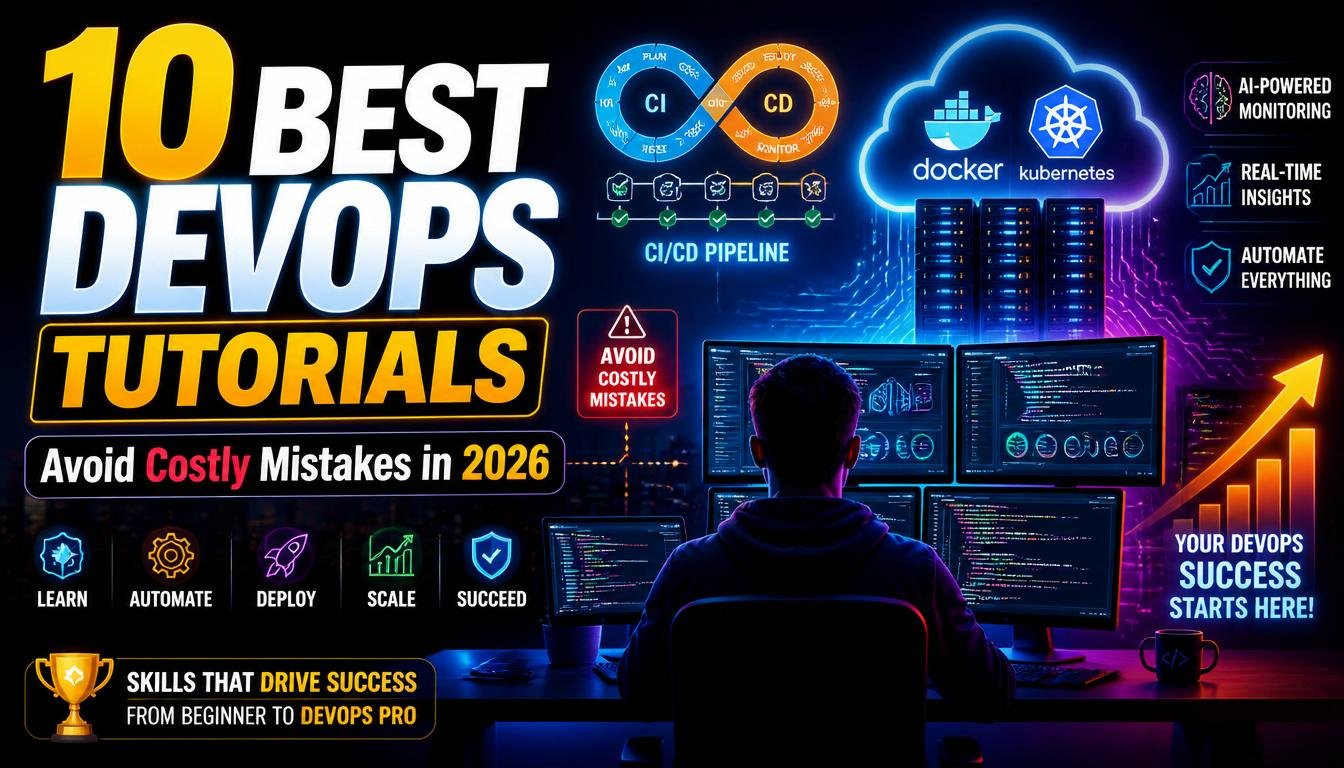
If you want to build a successful career in technology, learning DevOps is one of the smartest choices you can make in 2026. Companies everywhere are looking for professionals who can automate processes, manage cloud infrastructure, and deliver software quickly. This growing demand has made droven io devops tutorials a popular learning resource for beginners and experienced professionals alike.
Many people start learning DevOps but quickly become confused because there are so many tools and concepts involved. Linux, Git, Docker, Kubernetes, CI/CD, Terraform, cloud platforms, and monitoring tools can feel overwhelming at first. Without a clear roadmap, learners often jump between resources and struggle to make progress. This is one reason why structured learning paths have become so valuable.
The good news is that droven io devops tutorials provide a more organized approach. Instead of learning random topics, you can follow a step-by-step path that gradually builds your knowledge. This helps learners understand how different DevOps technologies connect and work together in real-world environments.
In this complete guide, you will learn what Droven io DevOps tutorials are, why they matter, which topics they cover, common mistakes to avoid, career opportunities, future trends, and practical tips that can help you become a successful DevOps professional.
What Are Droven io DevOps Tutorials?
The term droven io devops tutorials refers to structured learning resources that teach modern DevOps concepts from beginner to advanced levels. These tutorials are designed to help learners understand both the technical and practical sides of DevOps without feeling overwhelmed by complicated terminology.
One of the biggest challenges in DevOps education is the large number of tools involved. Beginners often do not know where to start. Some begin with Kubernetes before learning Docker, while others try cloud platforms before understanding Linux. This lack of structure creates confusion and slows down progress. A proper learning roadmap solves this problem by teaching concepts in the correct order.
Another advantage of these tutorials is their focus on practical implementation. DevOps is not just about reading theory. Real understanding comes from creating projects, deploying applications, and solving actual technical problems. Hands-on learning allows students to build confidence while gaining experience that employers value.
Modern businesses rely heavily on DevOps practices. Organizations want faster software releases, better security, and more reliable infrastructure. As a result, DevOps skills are now needed across industries such as healthcare, banking, e-commerce, education, and media. Learning these skills can create opportunities in both local and international job markets.
A structured DevOps learning path helps students move from basic concepts to advanced technologies. Instead of memorizing commands, learners develop a deeper understanding of how systems work together. This makes it easier to adapt to new tools and technologies in the future.
For beginners, having a clear roadmap can make the learning process much less stressful. Rather than wondering what to learn next, they can focus on building one skill at a time while steadily progressing toward their career goals.
Why Droven io DevOps Tutorials Are Important in 2026
Technology continues to evolve rapidly, and DevOps has become a critical part of modern software development. Companies now expect software updates to be released quickly while maintaining high levels of reliability and security. Meeting these expectations would be difficult without DevOps practices.
The demand for DevOps professionals has increased significantly over the past few years. Businesses want experts who understand automation, cloud infrastructure, deployment pipelines, and system monitoring. Because of this demand, many learners are actively searching for resources that can help them build these valuable skills.
One reason droven io devops tutorials are important in 2026 is their focus on current technologies. The DevOps field changes quickly, and outdated learning materials can leave students behind. Learning resources that cover modern tools and industry practices help learners stay competitive in the job market.
Another important factor is accessibility. Many traditional training programs are expensive and may not fit everyone’s schedule. Online tutorials allow learners to study at their own pace while balancing work, education, or personal commitments. This flexibility makes DevOps education more accessible to a wider audience.
Organizations are increasingly adopting cloud-native technologies and automation strategies. As a result, DevOps knowledge is no longer limited to large technology companies. Small businesses, startups, and even government organizations now seek professionals who can improve operational efficiency through automation.
In addition, DevOps encourages a mindset of collaboration and continuous improvement. These skills are valuable beyond technical roles because they promote problem-solving, communication, and teamwork. Learning DevOps can therefore contribute to both professional growth and personal development.
As technology becomes more important in everyday business operations, the value of DevOps skills is likely to continue growing. Learners who invest time in building these abilities today may benefit from stronger career opportunities in the years ahead.
Key Topics Covered in Droven io DevOps Tutorials
One of the strengths of droven io devops tutorials is the broad range of topics included in the learning journey. DevOps combines several disciplines, and understanding each area helps create a complete skill set.
Linux fundamentals are often the starting point. Since many production environments use Linux servers, understanding basic commands, file management, permissions, and networking concepts is extremely important. A strong Linux foundation makes learning advanced technologies much easier later.
Version control is another key topic. Git has become the industry standard for managing source code and collaborating with development teams. Learners discover how repositories work, how changes are tracked, and how teams coordinate development efforts through branching and merging strategies.
Containerization is usually introduced after foundational topics. Docker allows applications and their dependencies to be packaged into portable containers. This ensures consistency across development, testing, and production environments. Containers have become a core component of modern software delivery.
Cloud computing is also a major focus area. Learners explore services offered by leading cloud providers such as AWS, Microsoft Azure, and Google Cloud Platform. These platforms provide infrastructure, networking, storage, security, and application hosting capabilities.
Automation and CI/CD practices are covered extensively because they form the backbone of DevOps workflows. Students learn how automated testing, deployment pipelines, and infrastructure management improve efficiency and reduce human errors.
Monitoring, logging, and security topics are also important. Modern applications require continuous observation to maintain reliability and performance. Security practices help organizations protect systems, data, and customer information while meeting compliance requirements.
By combining all these subjects into a structured roadmap, learners gain a comprehensive understanding of how modern software systems are built, deployed, monitored, and maintained.
Docker and Containerization Explained for Beginners
Docker is one of the most important tools in modern DevOps. Almost every company that follows cloud-native practices uses containers in some way. This is why Docker is usually one of the first technical skills covered in droven io devops tutorials. Understanding Docker can make the rest of the DevOps journey much easier because many advanced tools are built around container technology.
Before Docker became popular, developers often faced a common problem. An application would work perfectly on one computer but fail when moved to another environment. Different operating systems, software versions, and configurations caused unexpected errors. Docker solved this issue by packaging applications together with all their dependencies into containers that run consistently across different environments.
A container is lightweight, portable, and easy to deploy. Developers can create a Docker image once and run it almost anywhere. This consistency improves reliability and reduces troubleshooting time. As a result, software teams can focus more on development and less on environment-related problems. Businesses also benefit because applications become easier to maintain and scale.
A practical example helps explain the value of Docker. Imagine a company launching a new online store. The development team creates the application on their local computers. Instead of manually configuring production servers, they package the application into Docker containers. The same containers are then deployed to testing and production environments. Everything behaves consistently, reducing deployment risks.
Another reason Docker is so valuable is its integration with other DevOps tools. CI/CD pipelines, Kubernetes clusters, and cloud platforms all work well with Docker containers. Learning containerization provides a strong foundation for understanding more advanced technologies later. Many experienced engineers recommend mastering Docker before moving to orchestration platforms.
For beginners, Docker offers a practical introduction to modern DevOps workflows. It teaches important concepts such as portability, automation, and scalability. By learning how containers work, students gain a better understanding of how software moves from development to production. This knowledge becomes extremely useful as they continue exploring the broader DevOps ecosystem.
Learning Kubernetes Through Droven io DevOps Tutorials
After learning Docker, the next logical step is Kubernetes. As organizations deploy more containers, managing them manually becomes difficult. Kubernetes was created to solve this challenge by automating the deployment, scaling, and management of containerized applications. This makes Kubernetes one of the most valuable technologies covered in droven io devops tutorials.
Kubernetes acts like a manager for containers. Instead of monitoring each container individually, teams use Kubernetes to handle everything automatically. It can restart failed applications, distribute workloads across servers, and ensure services remain available even when hardware problems occur. These capabilities make Kubernetes extremely useful for businesses that rely on large-scale applications.
One reason Kubernetes is so popular is scalability. Imagine an online streaming platform experiencing a sudden increase in traffic. Without automation, administrators would need to manually add resources to handle the extra demand. Kubernetes can perform this task automatically, ensuring users continue receiving a smooth experience without interruptions.
The platform uses concepts such as pods, nodes, deployments, and services. While these terms may seem confusing initially, they become easier to understand through practical examples. A pod represents one or more containers, while nodes provide the computing resources needed to run them. Deployments help manage application updates, and services allow communication between components.
Many companies consider Kubernetes expertise a highly desirable skill. Job descriptions for DevOps Engineers, Site Reliability Engineers, and Platform Engineers frequently mention Kubernetes experience. As organizations continue adopting cloud-native architectures, the demand for professionals who understand container orchestration continues to grow.
Learning Kubernetes also introduces students to important concepts such as high availability, fault tolerance, and infrastructure automation. These ideas extend beyond a single tool and apply to many areas of modern software engineering. Understanding them helps learners build a deeper appreciation for how large-scale systems operate.
Although Kubernetes may appear complex at first, a structured learning approach makes it much easier to understand. Starting with Docker fundamentals and gradually moving toward orchestration concepts allows learners to build confidence while developing practical skills that are highly valued in the technology industry.
CI/CD Pipelines and Automation in Modern DevOps
Continuous Integration and Continuous Delivery are at the heart of DevOps. These practices allow teams to deliver software updates quickly while maintaining quality and stability. Because automation plays such an important role in modern software development, CI/CD concepts receive significant attention in droven io devops tutorials.
Continuous Integration focuses on regularly combining code changes into a shared repository. Whenever developers submit new code, automated tests verify that everything works correctly. This process helps identify problems early before they become larger and more expensive to fix. Early feedback improves software quality and reduces development delays.
Continuous Delivery extends this concept further by automating the deployment process. Applications move through testing and staging environments before reaching production. Teams can release updates more frequently because much of the manual work has been replaced by automated systems. This improves efficiency and helps organizations respond quickly to changing customer needs.
A real-world example demonstrates the benefits of CI/CD. Imagine an e-commerce company preparing for a major holiday sale. Developers are constantly updating features and fixing issues. Without automation, every change would require manual testing and deployment. This would consume time and increase the risk of errors. CI/CD pipelines automate these processes, allowing updates to be released safely and quickly.
Popular tools used for automation include Jenkins, GitHub Actions, GitLab CI/CD, and ArgoCD. Each platform provides features for building, testing, and deploying applications automatically. Learning these tools helps students understand how modern software teams maintain speed while preserving reliability.
One expert recommendation is to automate repetitive tasks whenever possible. Even simple activities performed every day can consume valuable time. Automation improves consistency, reduces human mistakes, and allows teams to focus on innovation rather than routine operations.
The importance of CI/CD continues to grow as businesses demand faster release cycles. Organizations that implement strong automation practices often achieve better productivity, improved software quality, and greater customer satisfaction. For this reason, mastering automation remains one of the most valuable skills in the DevOps field.
Cloud Computing Skills You Can Learn
Cloud computing has transformed the technology industry. Instead of purchasing expensive hardware and maintaining physical data centers, businesses can access computing resources through cloud platforms. This flexibility has made cloud technology an essential component of modern DevOps practices and a major focus of droven io devops tutorials.
The three leading cloud providers are Amazon Web Services (AWS), Microsoft Azure, and Google Cloud Platform (GCP). These platforms offer services for computing, storage, networking, security, databases, and application hosting. Understanding these services helps DevOps professionals build scalable and reliable systems.
One of the biggest advantages of cloud computing is flexibility. Organizations can quickly increase or decrease resources based on demand. During periods of high traffic, additional servers can be provisioned automatically. When demand decreases, unnecessary resources can be removed to reduce costs. This scalability is one reason businesses increasingly rely on cloud platforms.
Cloud environments also support automation. Instead of manually configuring infrastructure, teams can create resources through code. This approach improves consistency and reduces errors. Infrastructure as Code tools such as Terraform allow organizations to manage cloud environments efficiently while maintaining version control.
Security is another important area of cloud learning. Modern cloud platforms provide advanced security features including identity management, encryption, monitoring, and compliance controls. Understanding these features helps organizations protect sensitive data while meeting regulatory requirements.
A practical example involves a startup launching a new online service. Rather than investing heavily in physical infrastructure, the company can deploy applications on cloud platforms and scale resources as the business grows. This approach reduces upfront costs while providing flexibility for future expansion.
Cloud computing skills continue to be highly valued by employers. Many DevOps positions require experience with at least one major cloud provider. By developing cloud expertise alongside automation and containerization skills, learners become better prepared for the demands of modern technology environments.Common Mistakes to Avoid While Learning DevOps
Learning DevOps can be exciting, but many beginners make mistakes that slow down their progress. The good news is that most of these mistakes can be avoided with the right mindset and learning strategy. Understanding these challenges early can help learners make faster progress while getting the maximum benefit from droven io devops tutorials.
One of the biggest mistakes is skipping the fundamentals. Many beginners want to jump directly into advanced technologies such as Kubernetes, Terraform, or cloud architecture. However, without understanding Linux, networking basics, and Git, these advanced tools can become difficult to manage. Strong foundations make every future topic easier to understand and apply.
Another common mistake is trying to learn too many tools at the same time. DevOps includes dozens of technologies, and beginners often feel pressure to master everything quickly. This usually creates confusion rather than progress. It is much better to focus on one technology, practice it properly, and then move on to the next skill. A structured learning path helps prevent information overload.
Many learners also spend too much time watching tutorials without building projects. Watching videos and reading guides are useful, but real learning happens when you apply concepts in practical situations. Creating Docker containers, setting up CI/CD pipelines, and deploying applications to cloud platforms helps reinforce knowledge and build confidence.
Ignoring troubleshooting skills is another mistake. In real DevOps environments, things rarely work perfectly on the first attempt. Successful engineers learn how to read logs, identify problems, and solve issues efficiently. Developing troubleshooting skills early can significantly improve learning outcomes and prepare students for professional responsibilities.
Finally, some learners stop studying once they understand the basics. However, DevOps evolves rapidly, and new tools appear regularly. Continuous learning is essential for long-term success. Professionals who stay updated with industry trends often have better career opportunities and greater adaptability in changing technology environments.
Career Opportunities After Completing Droven io DevOps Tutorials
The demand for DevOps professionals continues to grow across the world. Businesses are adopting cloud technologies, automation practices, and modern deployment systems at a rapid pace. As a result, individuals who complete droven io devops tutorials can explore a wide range of exciting career opportunities in the technology industry.
DevOps skills are valuable because they combine multiple disciplines. Professionals understand development workflows, infrastructure management, cloud services, automation, monitoring, and security practices. This broad skill set allows them to contribute to different parts of a company’s technology operations.
Organizations across industries are searching for qualified professionals who can improve efficiency and maintain reliable systems. Technology companies are not the only employers seeking DevOps talent. Banks, healthcare providers, educational institutions, government agencies, and e-commerce businesses also need experts who can support digital transformation initiatives.
Remote work opportunities have further increased the appeal of DevOps careers. Many organizations now hire professionals from different countries, allowing skilled individuals to work with international teams. This creates access to larger job markets and potentially higher salaries than local opportunities alone.
Another advantage of DevOps careers is long-term stability. As software becomes more important to business operations, organizations will continue investing in automation, cloud infrastructure, and reliability engineering. These trends create ongoing demand for professionals who understand modern DevOps practices.
The combination of strong demand, attractive salaries, and diverse career paths makes DevOps one of the most promising fields in technology today. Learners who develop practical skills and gain hands-on experience often find many opportunities for professional growth.
Top DevOps Job Roles
Several career paths become available after building strong DevOps skills. Each role focuses on different aspects of software delivery, infrastructure management, and automation.
Popular DevOps-related job roles include:
- DevOps Engineer
- Cloud Engineer
- Site Reliability Engineer (SRE)
- Platform Engineer
- DevSecOps Engineer
- Automation Engineer
- Infrastructure Engineer
- Cloud Solutions Architect
A DevOps Engineer typically focuses on deployment automation, infrastructure management, and collaboration between development and operations teams. Cloud Engineers specialize in designing and maintaining cloud environments using platforms such as AWS, Azure, and Google Cloud.
Site Reliability Engineers focus heavily on system performance, monitoring, and reliability. Their goal is to ensure applications remain available and perform efficiently under different conditions. Platform Engineers build internal systems that help development teams work more effectively.
DevSecOps Engineers combine security practices with automation workflows. As cybersecurity becomes more important, organizations increasingly seek professionals who can integrate security into development and deployment processes.
Each role offers unique responsibilities and learning opportunities. However, all of them benefit from a strong foundation in automation, cloud computing, and infrastructure management.
Average Salary Expectations
Salary potential is one reason many people choose to learn DevOps. Because these skills are in high demand, employers are often willing to offer competitive compensation packages to qualified professionals.
Entry-level DevOps professionals can earn attractive salaries while continuing to develop their skills. As experience grows, compensation often increases significantly. Professionals who specialize in cloud computing, Kubernetes, security, or platform engineering may command even higher salaries.
In countries such as the United States, experienced DevOps Engineers frequently earn six-figure salaries. Cloud Engineers and Site Reliability Engineers are also among the highest-paid technology professionals. Salary levels vary depending on location, industry, certifications, and practical experience.
Remote opportunities have created additional earning potential. Many organizations hire talent globally, allowing skilled professionals to access international job markets. This flexibility can provide significant career advantages for individuals who continue developing their expertise.
Although salary should not be the only motivation for learning DevOps, it remains a strong indicator of the value organizations place on these skills. Continuous learning and hands-on experience often lead to better career opportunities and higher compensation over time.
Best Certifications to Boost Your Career
Certifications can strengthen your resume and demonstrate commitment to professional development. While practical experience remains the most important factor, certifications can help validate technical knowledge and improve job prospects.
Popular certifications include:
- AWS Certified DevOps Engineer
- AWS Solutions Architect Associate
- Certified Kubernetes Administrator (CKA)
- HashiCorp Terraform Associate
- Microsoft Azure Administrator
- Google Professional Cloud Engineer
- Docker Certified Associate
- Certified Kubernetes Application Developer (CKAD)
These certifications cover cloud computing, container orchestration, infrastructure automation, and system management. Many employers recognize them as evidence of technical competence and dedication to learning.
Before pursuing certifications, it is helpful to gain hands-on experience through projects and practical exercises. Combining real-world skills with industry-recognized credentials creates a stronger professional profile and improves confidence during interviews.
For many learners, certifications become valuable milestones that mark progress and encourage continued growth throughout their DevOps journey.
How to Get the Most Value from Droven io DevOps Tutorials
Learning resources alone do not guarantee success. The way you study, practice, and apply knowledge plays an equally important role. Learners who approach droven io devops tutorials strategically often achieve better results and build stronger technical skills.
Follow a Structured Learning Roadmap
One of the best ways to succeed in DevOps is to follow a logical learning sequence. Starting with Linux, Git, and networking fundamentals creates a strong base for advanced topics. After mastering these skills, learners can move toward Docker, cloud platforms, Kubernetes, automation tools, and monitoring systems.
A structured roadmap prevents confusion and helps students understand how technologies connect. Instead of randomly selecting tutorials, learners can focus on building knowledge layer by layer. This approach improves retention and makes difficult topics easier to understand.
Consistency is also important. Studying for a short period each day is often more effective than trying to learn everything in a single weekend. Regular practice builds momentum and helps reinforce important concepts over time.
Build Real-World Projects
Practical experience is one of the most effective ways to learn DevOps. Reading about Docker or Kubernetes is helpful, but implementing these technologies in real projects creates deeper understanding.
Project ideas include:
- Deploying a website using Docker containers
- Creating a CI/CD pipeline with GitHub Actions
- Hosting applications on AWS or Azure
- Monitoring servers using Prometheus and Grafana
- Managing infrastructure with Terraform
Building projects also creates portfolio content that can be shared with employers. Recruiters often appreciate candidates who demonstrate practical skills rather than relying solely on certifications.
In addition, projects encourage troubleshooting and problem-solving. These experiences mirror real workplace situations and help learners become more confident when facing technical challenges.
Stay Updated with New DevOps Trends
Technology changes quickly, and DevOps is no exception. New tools, methodologies, and best practices appear regularly. Staying informed helps professionals remain competitive and adapt to evolving industry requirements.
Useful ways to stay updated include:
- Reading DevOps blogs and industry news
- Following technology communities
- Watching conference presentations
- Participating in online forums
- Exploring new cloud services
Continuous learning is one of the defining characteristics of successful DevOps professionals. Those who remain curious and adaptable often discover new opportunities for growth and innovation.
By combining structured learning, practical projects, and ongoing education, learners can maximize the value of their DevOps journey and prepare themselves for long-term success in the technology industry.The Future of DevOps: AI, GitOps, and Platform Engineering
The DevOps landscape continues to evolve every year, and 2026 is bringing some exciting changes. While automation, cloud computing, and CI/CD remain important, new technologies are making DevOps even more powerful. Learners who complete droven io devops tutorials should also understand where the industry is heading so they can prepare for future opportunities.
Artificial Intelligence is becoming a major part of DevOps operations. AI-powered monitoring tools can analyze system behavior, identify unusual patterns, and even predict failures before they happen. This helps organizations reduce downtime and improve user experiences. Instead of waiting for problems to occur, teams can take action early and prevent disruptions.
GitOps is another trend gaining popularity across the industry. In a GitOps workflow, Git repositories become the single source of truth for infrastructure and application deployments. Every change is tracked, reviewed, and automatically applied through automation tools. This approach improves transparency, security, and consistency across development environments.
Platform Engineering is also changing how organizations manage technology infrastructure. Rather than requiring developers to handle every infrastructure task manually, platform teams create internal tools and self-service systems. These platforms allow developers to focus more on building applications while still maintaining operational standards and security requirements.
Security continues to play an increasingly important role as well. Modern DevSecOps practices integrate security checks directly into development and deployment pipelines. Vulnerability scanning, compliance verification, and automated security testing are becoming standard requirements in many organizations.
Looking ahead, professionals who combine DevOps knowledge with AI, cloud-native technologies, automation, and security expertise will likely have the strongest career opportunities. The future of DevOps is not about replacing people with technology. Instead, it is about helping teams work smarter, faster, and more efficiently while maintaining high levels of reliability and security.
Final Thoughts on Droven io DevOps Tutorials
Learning DevOps may seem challenging when you first begin, but the journey becomes much easier when you follow a structured roadmap. Droven io devops tutorials provide a practical way to learn essential skills such as Linux, Git, Docker, Kubernetes, cloud computing, automation, monitoring, and security. By focusing on fundamentals first and gradually moving toward advanced technologies, learners can build confidence and develop valuable real-world expertise.
The technology industry continues to create strong demand for DevOps professionals, and that demand is expected to grow in the coming years. Whether your goal is to become a DevOps Engineer, Cloud Engineer, Site Reliability Engineer, or Platform Engineer, the key to success is consistent learning and hands-on practice. Follow a clear roadmap, build real projects, stay updated with industry trends, and continue improving your skills. With dedication and the right learning resources, you can create a rewarding and future-proof career in DevOps.
Frequently Asked Questions
Q: What are droven io devops tutorials?
A: Droven io devops tutorials are learning resources designed to teach DevOps concepts, cloud computing, automation, containerization, CI/CD, and infrastructure management through a structured roadmap.
Q: Are droven io devops tutorials suitable for complete beginners?
A: Yes. Beginners can start with Linux, Git, and networking fundamentals before progressing to Docker, Kubernetes, cloud platforms, and automation tools.
Q: Which DevOps skill should I learn first?
A: Most experts recommend starting with Linux and Git because they provide the foundation needed for understanding more advanced DevOps technologies.
Q: Do I need coding experience to learn DevOps?
A: Basic programming knowledge can help, but many DevOps concepts can be learned without advanced coding skills. Scripting knowledge becomes useful as you progress.
Q: What certifications are useful after completing droven io devops tutorials?
A: Popular certifications include AWS Certified DevOps Engineer, Certified Kubernetes Administrator (CKA), HashiCorp Terraform Associate, and Microsoft Azure Administrator.
Q: How long does it take to become job-ready in DevOps?
A: The timeline varies depending on your background and study habits. Many learners can build job-ready skills within six to twelve months through consistent learning and practical projects.