
What Is Endbugflow Software and Why Is It Important?
Modern businesses need better ways to manage projects, track tasks, and keep teams connected. As companies grow, it becomes harder to organize work using emails, spreadsheets, and separate tools. This is where endbugflow software helps. It provides a central place where teams can manage projects, monitor progress, and improve communication.
Many organizations struggle with missed deadlines, unclear responsibilities, and scattered information. When team members use different systems, important updates can easily get lost. A workflow management platform solves this problem by bringing everything together in one dashboard. This helps everyone stay informed and work toward the same goals.
Another reason businesses use workflow software is to save time. Instead of manually updating team members or tracking project status through long meetings, employees can view real-time information instantly. This improves transparency and helps managers make better decisions based on accurate data.
Experts often recommend centralized workflow systems because they reduce confusion and improve accountability. When every task has an owner, deadline, and status update, teams can work more efficiently. This creates a smoother working environment and helps organizations deliver better results to clients and customers.
Key Features That Make Endbugflow Software Useful
One of the biggest strengths of endbugflow software is its collection of practical features. These tools are designed to help businesses organize work, improve productivity, and reduce manual effort. Instead of juggling multiple applications, teams can manage many activities from one platform.
Task management is one of the most valuable features. Managers can create assignments, set priorities, define deadlines, and monitor progress. Team members can see exactly what needs to be done and when it should be completed. This reduces misunderstandings and helps projects move forward smoothly.
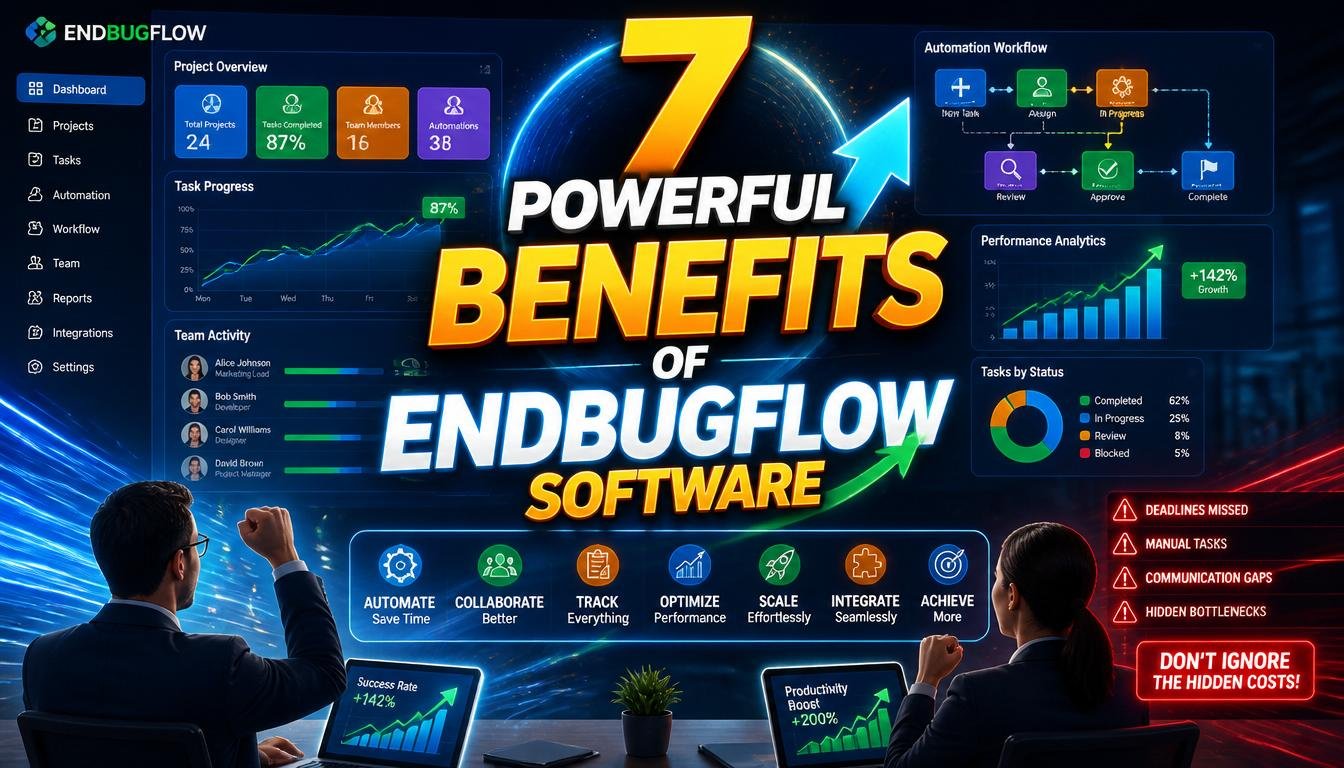
Visual dashboards are another important feature. These dashboards provide a clear overview of project performance. Managers can quickly identify delays, completed tasks, and upcoming deadlines. Having this information in one place makes planning easier and supports better decision-making.
Automation tools also play a major role. Repetitive activities such as reminders, status updates, approvals, and notifications can be automated. This reduces administrative work and allows employees to focus on more important responsibilities. Integration capabilities further improve efficiency by connecting communication tools, cloud storage services, customer support systems, and development platforms into one workflow.
Benefits of Using Endbugflow Software for Business Growth
Businesses are always looking for ways to improve productivity while controlling costs. A well-designed workflow solution can support both goals. By creating organized processes and improving communication, organizations can achieve better results with fewer obstacles.
One major benefit is improved efficiency. Employees spend less time searching for information because everything is available in a single system. This allows teams to focus on completing work instead of managing scattered files and conversations. Faster access to information often leads to quicker project completion.
Another advantage is stronger collaboration. Team members can share updates, comment on tasks, upload documents, and discuss project details within the platform. This keeps communication organized and reduces the need for long email chains. Everyone stays informed without spending extra time searching for updates.
A less obvious benefit is better accountability. Since tasks are assigned to specific individuals, it becomes easier to track responsibilities and monitor performance. Managers can quickly identify bottlenecks and provide support where needed. Over time, this creates a culture of ownership and continuous improvement that benefits the entire organization.
How Endbugflow Software Improves Team Collaboration
Successful projects depend on effective teamwork. Without clear communication, even skilled employees may struggle to achieve their goals. Workflow management tools create a shared workspace where everyone can collaborate more effectively regardless of location.
Remote and hybrid teams especially benefit from centralized communication. Employees working from different cities or countries can access the same project information in real time. This helps maintain consistency and reduces confusion about responsibilities and deadlines.
A practical example can be seen in a marketing team preparing a product launch. Designers, writers, managers, and social media specialists all need access to project updates. Instead of exchanging dozens of emails, they can use one platform to coordinate tasks, share files, and review progress. This saves time and reduces mistakes.
An expert insight often shared by project management professionals is that transparency improves trust. When team members can clearly see project status, expectations become easier to understand. As a result, collaboration becomes smoother, decision-making improves, and projects are more likely to succeed.
Business Use Cases Across Different Industries
Organizations in many industries use workflow management solutions to improve daily operations. While every business has unique needs, the goal remains the same: create efficient processes and keep teams aligned.
Technology companies often use these systems for software development, sprint planning, issue tracking, and release management. Developers can organize tasks, monitor progress, and communicate more effectively throughout the project lifecycle. This helps reduce delays and improve product quality.
Marketing departments benefit from workflow platforms by managing content calendars, advertising campaigns, design requests, and approval processes. Team members can track deadlines and collaborate on creative projects without losing important information. This leads to more organized campaigns and better results.
Healthcare providers, educational institutions, manufacturing companies, and customer service teams also use workflow tools. Hospitals can coordinate administrative tasks, schools can manage projects and programs, and manufacturers can improve production planning. Because workflows can often be customized, organizations can adapt the system to fit their specific operational requirements.
Security, Data Protection, and Reliability
Security is one of the most important factors when selecting business software. Organizations store sensitive information, including customer records, financial details, project documents, and internal communications. Protecting this data should always be a top priority.
Many modern workflow platforms include role-based access controls. This means employees only see information relevant to their responsibilities. Restricting access helps reduce security risks and supports compliance with company policies. It also creates a safer environment for handling confidential information.
Encryption is another critical feature. Data encryption protects information during storage and transmission, making it more difficult for unauthorized users to access sensitive content. Combined with secure authentication methods, encryption strengthens overall system security and builds trust among users.
Regular software updates contribute to long-term reliability. Updates often include security improvements, performance enhancements, and bug fixes. Organizations should combine platform security features with employee training, strong password policies, and backup procedures. Together, these practices create a stronger defense against potential threats and help ensure business continuity.
Choosing and Implementing Endbugflow Software Successfully
Understanding Your Business Needs
Before adopting endbugflow software, organizations should clearly define their goals. Some businesses want better project tracking, while others need stronger collaboration or workflow automation. Identifying these priorities helps ensure the platform supports real business challenges rather than adding unnecessary complexity.
A good starting point is reviewing current processes. Managers can identify bottlenecks, communication gaps, and repetitive tasks that consume valuable time. Understanding these issues makes it easier to configure workflows that deliver meaningful improvements.
It is also helpful to involve employees early in the process. Team members often understand daily challenges better than anyone else. Their feedback can reveal opportunities for improvement and increase support for the new system.
Therefore, businesses that plan carefully before implementation often experience smoother adoption and better long-term results.
Best Practices for a Smooth Rollout
Once goals are defined, organizations should begin with a small pilot project. Testing the platform with one department allows teams to identify issues before expanding across the company. This reduces risk and provides valuable learning opportunities.
Helpful implementation practices include:
- Provide employee training sessions
- Create clear onboarding guides
- Start with simple workflows
- Monitor early feedback
- Adjust processes when necessary
- Track performance metrics
In addition, managers should regularly review workflow effectiveness after deployment. Business needs change over time, and processes may require updates to remain efficient. A flexible approach ensures the platform continues supporting organizational growth.
Overall, successful implementation depends on planning, training, communication, and continuous improvement rather than technology alone.
Future Trends and the Long-Term Value of Endbugflow Software
How Workflow Technology Is Evolving
Workflow platforms continue to evolve as businesses demand greater efficiency. Artificial intelligence, predictive analytics, and advanced automation are becoming more common. These technologies help organizations identify problems earlier and make smarter decisions.
For example, future systems may automatically predict project delays based on historical data. Managers could receive recommendations before issues become serious. This proactive approach helps organizations save time and reduce operational risks.
However, technology alone does not guarantee success. Businesses still need clear processes, engaged employees, and effective leadership. Software works best when it supports a strong organizational culture focused on collaboration and accountability.
As a result, companies that combine modern tools with strong management practices often achieve the greatest benefits.
Long-Term Advantages for Growing Businesses
The long-term value of workflow software extends beyond daily task management. It helps organizations build repeatable processes that support growth. As teams expand, standardized workflows make it easier to maintain consistency and quality.
Key long-term advantages include:
- Better project visibility
- Improved team productivity
- Faster decision-making
- Reduced operational errors
- Stronger customer satisfaction
- Greater scalability
Also, businesses gain valuable performance data that can guide future improvements. Managers can identify trends, measure productivity, and optimize workflows based on real information rather than assumptions.
Finally, organizations that invest in efficient workflow systems position themselves for sustainable growth. By improving communication, automation, and accountability, they create a stronger foundation for future success in an increasingly competitive marketplace.
Conclusion
Businesses today need efficient ways to manage projects, organize tasks, and improve collaboration. Endbugflow software helps achieve these goals by centralizing workflows, increasing transparency, and reducing manual work. Whether a company is managing software development, marketing campaigns, customer service operations, or internal projects, a structured workflow platform can make daily work much easier.
The most successful organizations combine technology with smart planning and continuous improvement. By understanding business needs, training employees, and regularly reviewing workflows, companies can maximize the value of their investment. In the long run, better collaboration, stronger accountability, and improved efficiency help businesses grow with confidence and deliver better results.
Frequently Asked Questions
Q: What is endbugflow software used for?
A: It is used to manage workflows, organize projects, improve collaboration, and automate routine business tasks.
Q: Is endbugflow software suitable for small businesses?
A: Yes. It can help small businesses improve organization, productivity, and project management.
Q: Can it support remote teams?
A: Yes. Team members can access updates, tasks, and documents from different locations.
Q: Does endbugflow software improve productivity?
A: Yes. It reduces manual work, improves communication, and helps teams complete projects more efficiently.
Q: Is workflow software secure?
A: Most modern platforms include encryption, access controls, authentication features, and regular security updates.
Q: How long does implementation usually take?
A: It depends on business size and workflow complexity, but many organizations can begin using the platform within days or weeks.